Pre-school
Discover through play
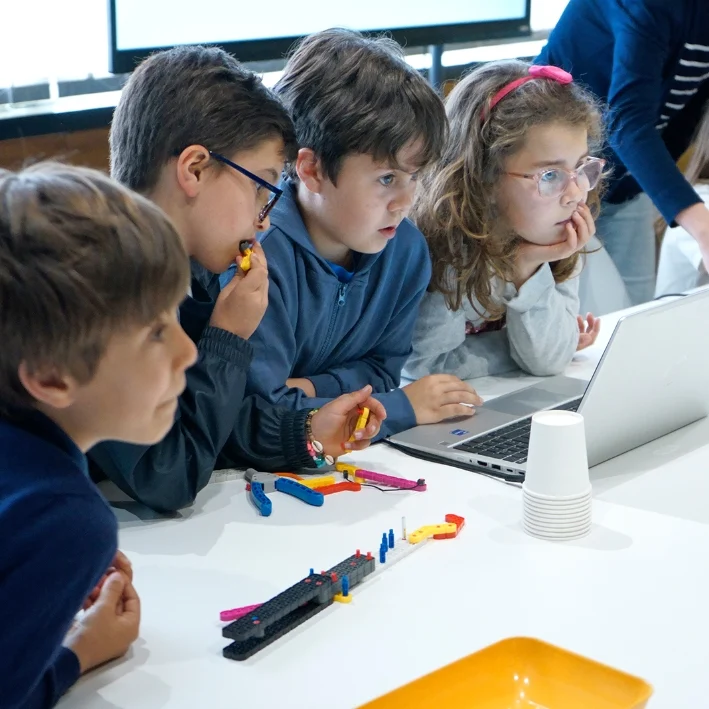
Exploration, construction, sequencing, spatial orientation, cause and effect, creativity and solving small challenges.
LearningLAB AECs
Learning, building and solving problems through technology. A practical and interdisciplinary AEC, aligned with the Essential Learning Outcomes and adapted to Pre-School, 1st, 2nd and 3rd Cycles.
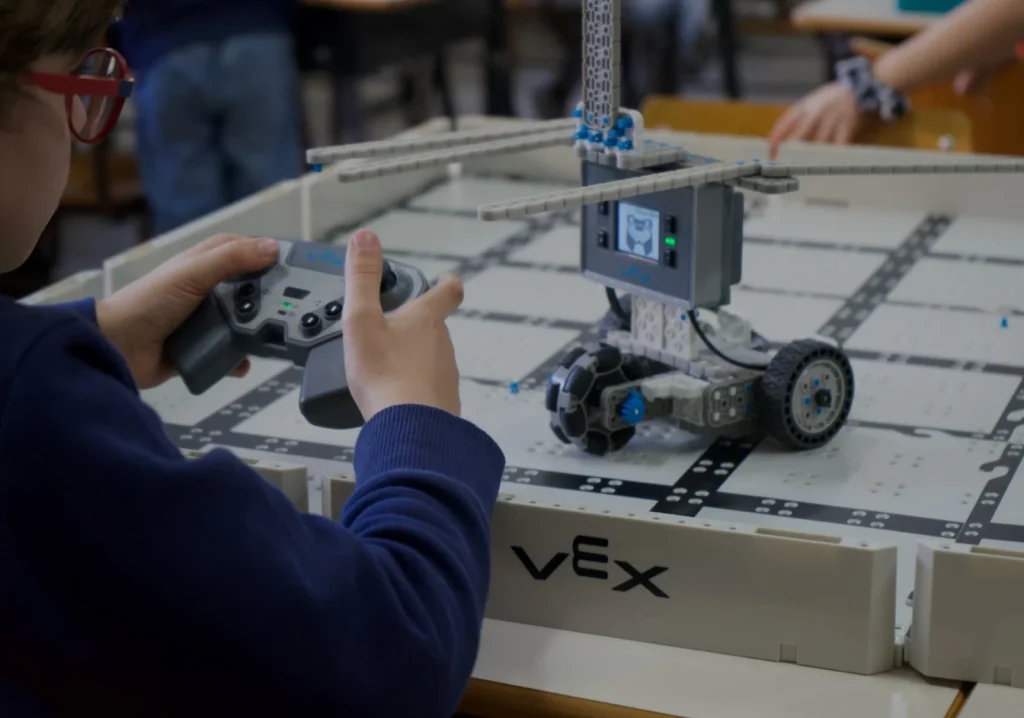
Educational Robotics makes it possible to create learning situations where pupils draw on knowledge from different areas and develop skills through experimentation, problem-solving and collaborative work.
The activities are designed to promote links between Technology, Mathematics, Science, Portuguese and cross-curricular skills, while respecting the characteristics and objectives of each level of education.
Curricular alignment
Robotics can act as a learning context for drawing on the knowledge and skills set out in the Essential Learning Outcomes, through practical and interdisciplinary challenges.
Logical reasoning, geometry, measures, patterns, spatial relationships and problem-solving.
Observation, experimentation, investigation and understanding of phenomena.
Programming, computational thinking, technological systems and responsible use of technology.
Communication, interpreting challenges, argumentation and presenting solutions.
Coordination, spatial orientation and movement-based challenges, where applicable.
Collaboration, autonomy, critical thinking, creativity and communication.
By level of education
The challenges, materials and objectives evolve with the age and skills of each group.
Pre-school
Exploration, construction, sequencing, spatial orientation, cause and effect, creativity and solving small challenges.
Primary School
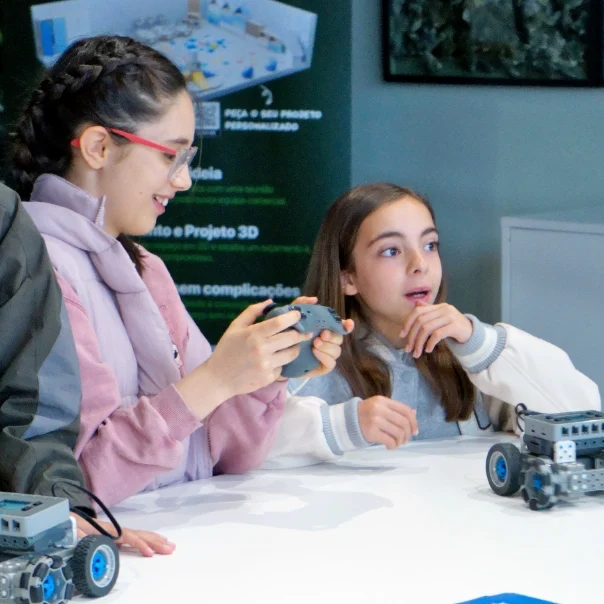
An introduction to building mechanisms, sequences, block programming and guided problem-solving linked to Mathematics and Environmental Studies.
Lower Secondary School
Building structures and mechanisms, using motors and sensors, block programming and the practical application of Mathematics and Science concepts.
Upper Secondary School
Developing robotics projects, algorithms, data collection, prototyping and iterative improvement of solutions to real-world challenges.
LearningLAB Methodology
Learning by doing: each challenge turns pupils into protagonists and mistakes into an opportunity to understand, improve and move forward.
We present a clear and motivating challenge.
Pupils plan and build their solution.
They give instructions to the robot and explore algorithms.
They put the solution into operation.
They identify what did not work and look for alternatives.
They record the process, the decisions and what they discovered.
They relate the experience to what they have learned and explain their solutions.
A closer look at a session
Each session combines discovery, construction and programming. The trainer presents a mission, supports the teams during experimentation and ends with the sharing of solutions.
Contextualisation of the challenge and the session objectives.
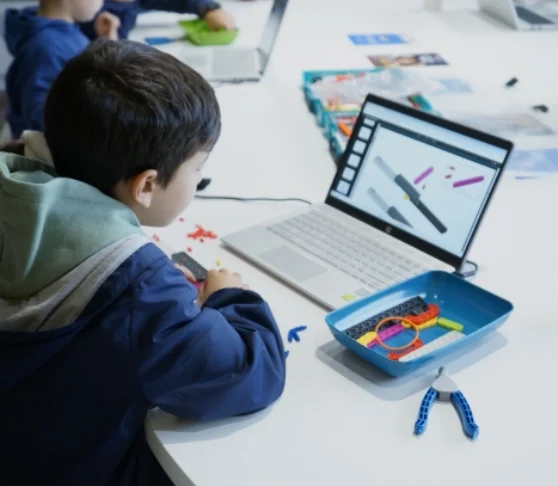
Teamwork with pieces, mechanisms, sensors and materials.
Creation of the instructions needed to complete the mission.
Experimentation, identification of errors and refinement of the solution.
Presentation of results and links to the learning achieved.
Activity examples
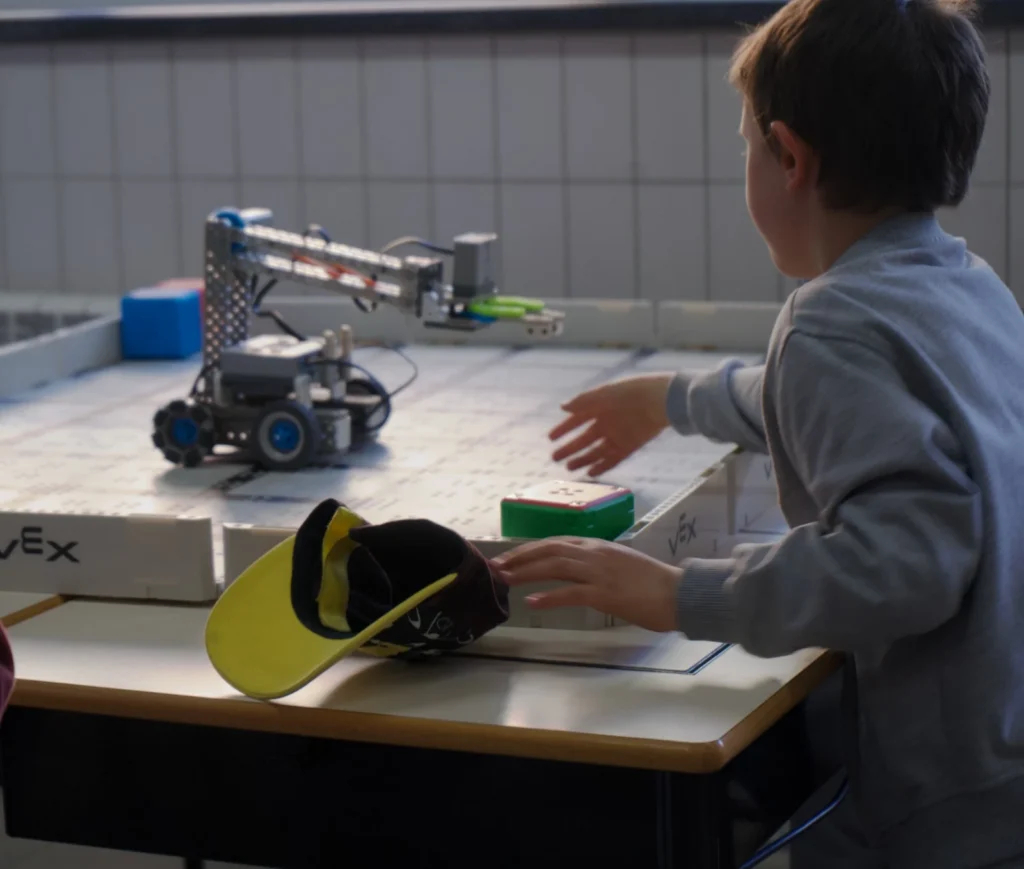
Programming a robot to follow a route, measure distances and avoid obstacles.
Exploring structures, stability, gears and movement.
Using sensors to detect light, distance, sound or contact and trigger actions.
Creating solutions linked to the environment, the city, space or other curriculum content.
A complete solution
LearningLAB ensures a simple, consistent implementation aligned with the institution's objectives.
LearningLAB experiences


Contact LearningLAB
Tell us what you are looking for. The LearningLAB team will help find the most suitable activities.
This website uses necessary cookies to work correctly and, with permission, optional cookies to understand the public journey from discovery to registration and purchase.
All cookies can be accepted or the website can continue with necessary cookies only. This choice can be changed at any time.
The optional category remains disabled unless the person expressly accepts it and can be changed here at any time.
Authentication, MFA and session security; shopping cart and payments; language and cookie preference. These functions cannot be provided reliably without their cookies.
Stores public pages visited, links and buttons used, form submissions without field contents, source or campaign, registration and purchase. Passwords and entered text are never stored. Events are kept for up to 12 months and are not used for advertising.
What happens if cookies are blocked? Public pages remain readable, but authenticated and transactional features may not work.